 |
Bo's Mine Tours
& Consulting Mine Tours and research for the Western North Carolina Spruce Pine Mining District Last Updated: July 9th, 2023 Email: bo_smith@bellsouth.net |
My Background
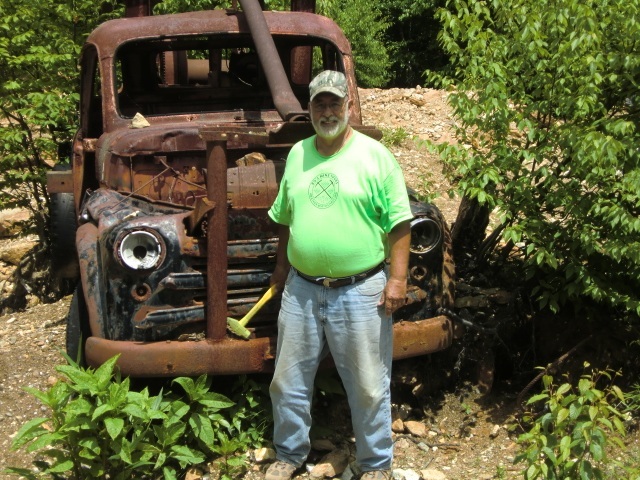 |
BA Geology- Cornell University 1963
U.S.Navy 1963-1991; Retired Captain (aircraft carrier pilot, squadron commander, ship's Captain)
Earth/Space Science high school teacher and university Earth Science Lab Instructor; 1991-2007
Program Manager, Protein Crystals in Space in Florida Schools; 1999-2008
Aerospace Education Mentor, Florida Space Research Institute; 2006-2007
Conducted research on geology and history of the Spruce Pine Pegmatite Mining District; 2006-present
Platinum Member, Mountain Area Gem and Mineral Association (MAGMA); 2006-2019
Member, Jacksonville Gem and Mineral Society (Florida); 2009-2011, 2015
Martin Feldspar Mine Tour guide for Rock Mine Tours; 2010-2012
Bo's Mine Tours; 2011-2016
*** Bo's Mine Tours History ***
2006 and 2007
I began my study of the pegmatite mines
in Mitchell, Avery, and Yancey counties in summers of 2006
and 2007 the school year (I was a high school educator
teaching Earth/Space Science). I used two references; "Rock,
Gem, and Mineral Collecting Sites in Western North
Carolina" authored by Richard James Jacquot and
Lowwell Presnell's "Mines, Miners, and Minerals of
Western Carolina. I visited as many mines as I could
in June both summers.
2008
2009 and 2010
2011 to 2015 (Bo's Mine Tours)
2016
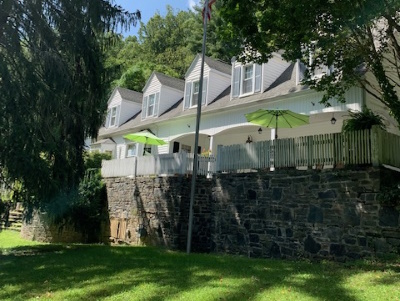 The Richmond Inn
|
My base of operations was The
Richmond Inn, a bed and breakfast located at 51
Pine Ave in Spruce Pine. The owner, Maggie Haskins, was a great host. She sent me off each morning with a great breakfast and had many suggestions on people I should meet to help in my research. She didn't even object when I spread out all the rocks I had collected on her patio. Maggie insisted that I meet Bud Phillips, owner of the Mitchell Lumber Company in Spruce Pine. She knew that Bud would be of significant help in my research of the mines. Maggie continues to be a friend. My wife and I stay with her at the Richmond Inn for a couple of weeks each year. |
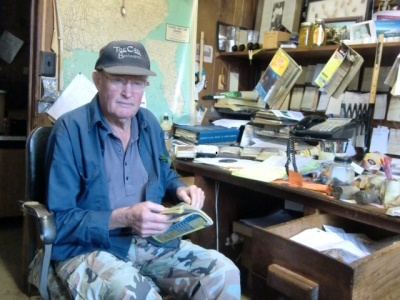 Bud Phillips
|
Bud Phillips was a large land
owner and forester who had numerous mines
on his properties. He took an interest in
me and was helpful in my research. I met with him as often as I could. Bud introduced me to important contacts such as Lud Liner, owner of "Rock Mine Tours" and Ed Silver, co-owner of the Sink Hole Mine,. In addition, he provided me with details about numerous mines such as his gold mine and the McBee Mica Mine. Bud passed away on March 1st, 2014. To learn more details about Bud's life check out my Obituary of Bud Phillips |
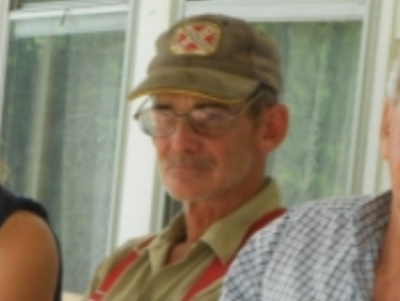 Ed Silver
|
Bud Phillips made a call to Ed Silver, co-owner of the Sinkhole Mica Mine, that resulted in many years of cooperation with my research, access to the mine for Bo's Mine Tours, and my Native American Mica Mining Project. He not only was helpful in supporting Bo's Mine Tours but we also spent many hours talking about the Silver Family history in the vicinity of Bandana and the town of KONA from the late 18th Century to the present. Note KONA: Potassium Oxygen, Sodium |
2008
I was not able to visit the
mountains in the summer of 2008. I was busy getting
married to my wonderful wife Diana in August. Our
wedding was followed by a road trip honey moon. During
the end of our road trip , we stayed at a cabin at
Pipestem in West Virginia. We enjoyed that experience
so much that we altered our itinerary back to
Jacksonville to include Spruce Pine where we stayed at
the Richmond Inn. While there in December, we
bought a cabin off Rice Road just a bit east of
Micaville between Burnesville and Spruce Pine.
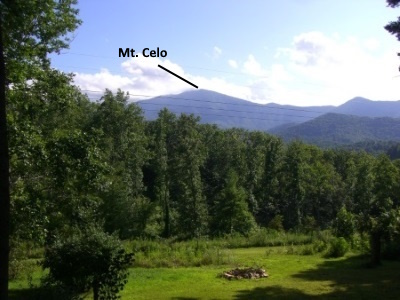 View of Black Mountains
and Mt Celo from our cabin porch deck
|
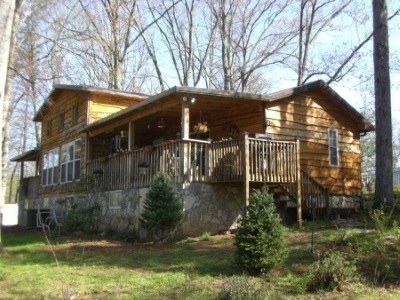 Our cabin was a rebuild
from a mobile home.
|
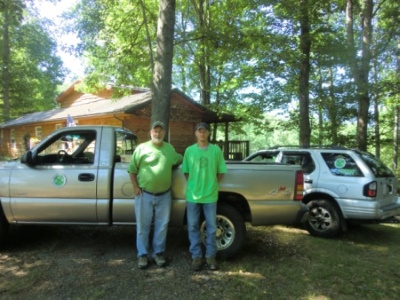 Me on the left with
Chris Wyatt
Chris helped me with cabin landscape maintenance as well as with Bo's Mine Tours |
2009 and 2010
During these
two years I continued my research of
area mines and was a tour guide of
the Martin Feldspar Mine for Lud
Leiner's Rock Mine Tours. Helping
out Lud gave me valuable experience
in giving tours for small family
groups of three to five to school
field trips with thirty or so
participants. After the two years of
working for Lud, I was ready to set
up Bo's Mine Tours in 2011. I
continued my friendship with Lud and
his wife Joyce.
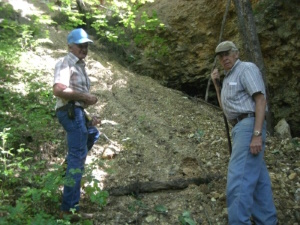 |
Don Wyatt lives on
Pine Avenue in Spruce Pine not far from the
Richmond Inn. Don is representative of the
typical mountain family; hardworking and
never retiring. In the picture on the left, Don is with Lud Leiner during a visit to the Goog Rock Mine. I was introduced to Lud by Bud Phillips. Lud has several mines on his property. The Martin Feldspar Mine features a beautiful trail along the bank of the Toe River. Lud established a mine tour business called Rock Mine Tours ad asked me to be one of his tour guides. |
 |
The Goog Rock Feldspar
Mine
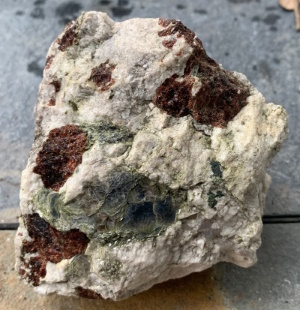
Lud Leiner had a key to the Goog Rock Mine gate. We visited the mine in 2010. Don Wyatt went along. He had an uncle who had worked the mine. The mine was located on the Toe River adjacent to Lud's property. The trail to the mine was challenging. The trail was mostly along on a contour along the steep slope to the river. The last hundred yards or so was up the slope to the mine. You knew when you were close to the mine because there was a cool breeze coming from the mine. We spent some time collecting samples from the mine tailings. Lud and I basically stayed in one location on the tailings while Don moved easily around the steep slope bringing samples to us. The sample to the left features large garnet crystals in very high quality feldspar. |
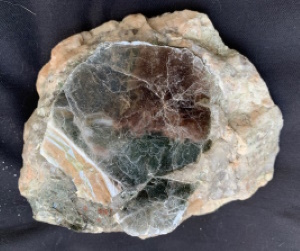 |
The Martin Feldspar Mine Updated
May 16th, 2023
|
2011 to 2015 (Bo's Mine Tours)
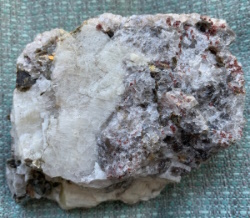
During the five
years that I operated Bo's Mine Tours,
I lead tours to the following mines.
Just click on the links below:
 |
Updated
May 15th, 2023
|
 |
|
 |
|
 |
|
 |
|
 |
2016
Due to loss of our cabin as a base
of operations and health factors, I am no longer
giving personal mine tours in North Carolina. I
thoroughly enjoyed giving tours and hope that I have
provided enjoyable and educational experiences for my
customers. I am leaving my Bo's
Mine Tours Website up however, to keep the
information on the mines available for those who
are planning trips to the area. I am gratified
that I continue to get requests for mine tours
and have provided advice and recommendations for
those who have contacted me. As a result. I am
including a section in the website covering the
most frequently asked questions and my
recommendations.
Bo's Mine Tours Jacksonville,
Florida
I
brought a large amount of North Carolina
pegmatite samples back with me to Florida
over the years. Using these materials, I
set up a miniature mine tailings for my
family and friends to explore.
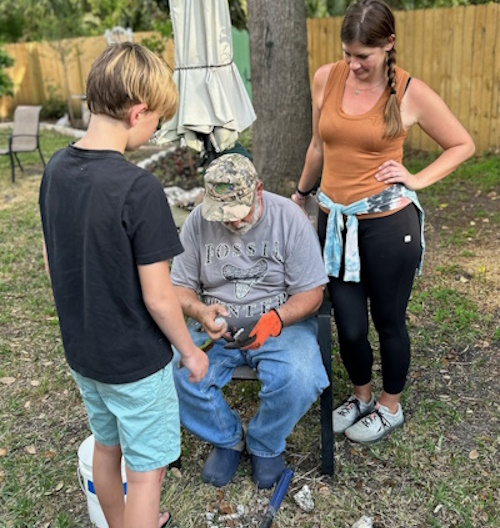
I particularly enjoy working one on one with children of elementary and middle school age explaining some aspect of the mining experience.
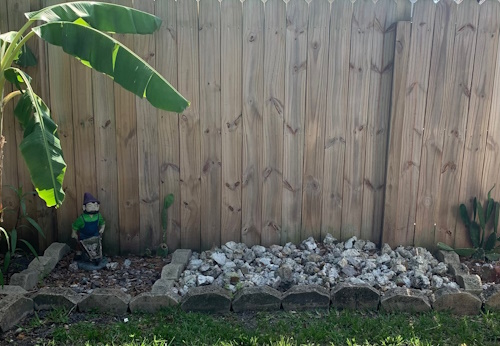 The large section on the right contains samples from North Carolina mines. The section on the left in front of the miner has samples of zinc minerals from the Sterling Hill Mine in Ogdensburg, New Jersey |
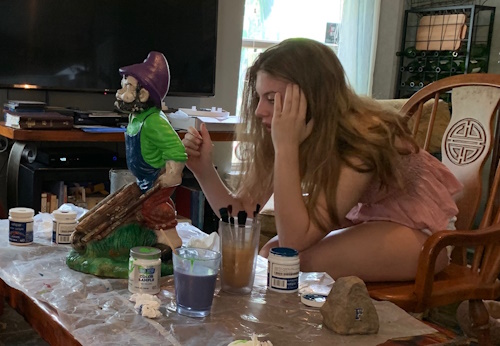 My granddaughter, Eliza, helped out by giving my miner a new paint job! |
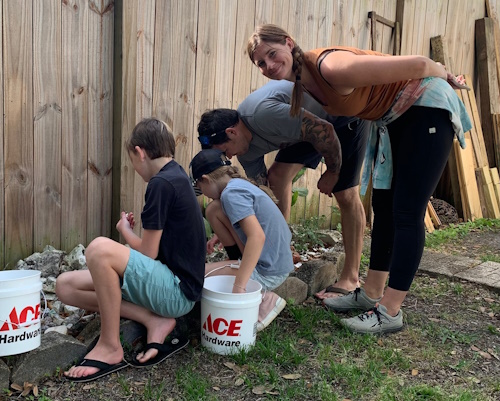 |
My daughter Lindsay and her family recently enjoyed a trip to my mine during a visit from California |
 |
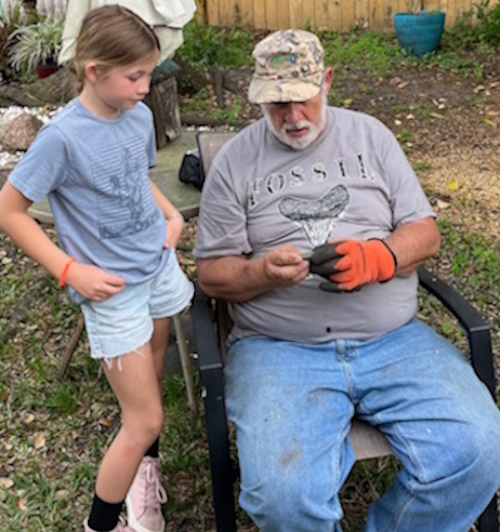 |
I particularly enjoy working one on one with children of elementary and middle school age explaining some aspect of the mining experience.